4/4/09
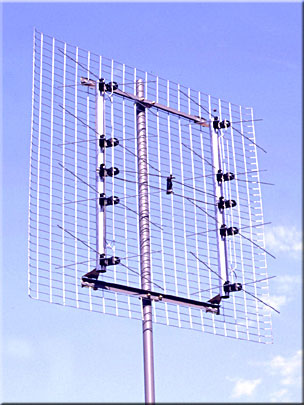
The Channel Master 4228
8-Bay
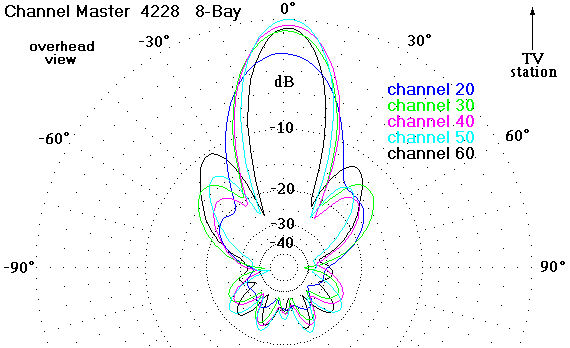
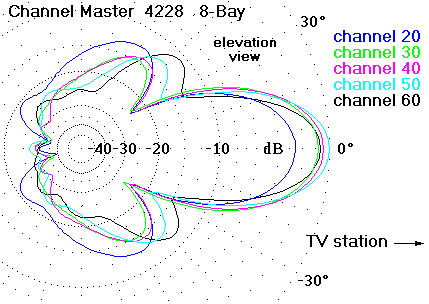
This page
describes the old 4228. That antenna is
mostly sold out nationwide. I have
written a review of the currently available 4228HD. That review is on a Temporary Page.
Channel
Master says this is their best UHF antenna.
It is probably the best overall UHF antenna available. But it is not without its faults. Since it is just two 4-Bays hooked together,
one would expect its gain to be 4 dB better across the band (3 dB for being
twice the antenna plus another dB for the continuous screen blocking more
radiation out the back). But its special
feed lines are badly designed. They
radiate and are poorly matched to the line.
The 4-Bay outperforms it above channel 60. Replacing the feed lines with two baluns and
a splitter would probably yield a higher net gain. (The author has not tried this.)
The 4228 is
galvanized steel. At 8 lb it is very
heavy. The weight becomes a severe
problem when ganging two or more together on a roof. About half of the time it comes with the
screen improperly clamped on. The author
performed simulations both with the two screen touching and with them
separated. There was no significant
difference at UHF frequencies.
High gain
antennas like this one are big, hard to aim, and hard to keep up in bad
weather. The author does not normally
recommend this antenna inside 25 miles.
But there are two exceptions to this:
- A very high gain antenna might be
necessary behind a hill or in a valley.
- When an obstruction is causing
multi-path, a very directional antenna such as this one can reject signal
from the wrong directions.
This antenna
is advertised solely as a UHF antenna. But,
as many people have discovered, it has strong gain for VHF-high, especially
channel 9-13. What gives it this ability
is the continuous screen. Other 8-bays
have a reflector that is not continuous across the right and left halves. Those antennas have little usefulness for VHF
channels.
The
continuous screen is not simply a reflector for these channels, but rather it
becomes the primary radiating element.
As a result, radiation out the back is very strong, nearly
bi-directional for some channels.
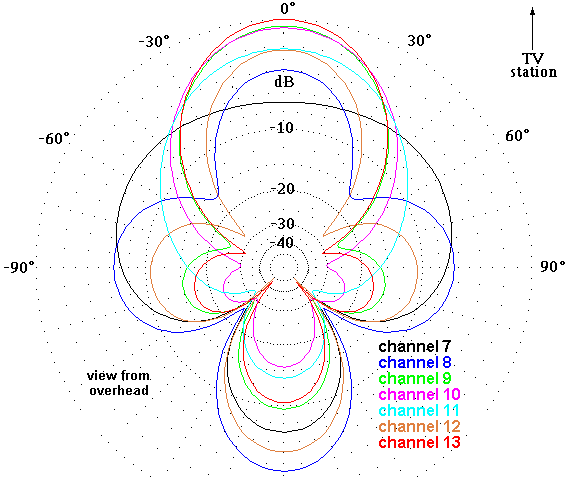
If you buy
this antenna for VHF there is one problem:
The screen is in two halves that touch but are not solidly connected to
each other. This brings up two
questions:
- Is this important?
- What effect will wind have?
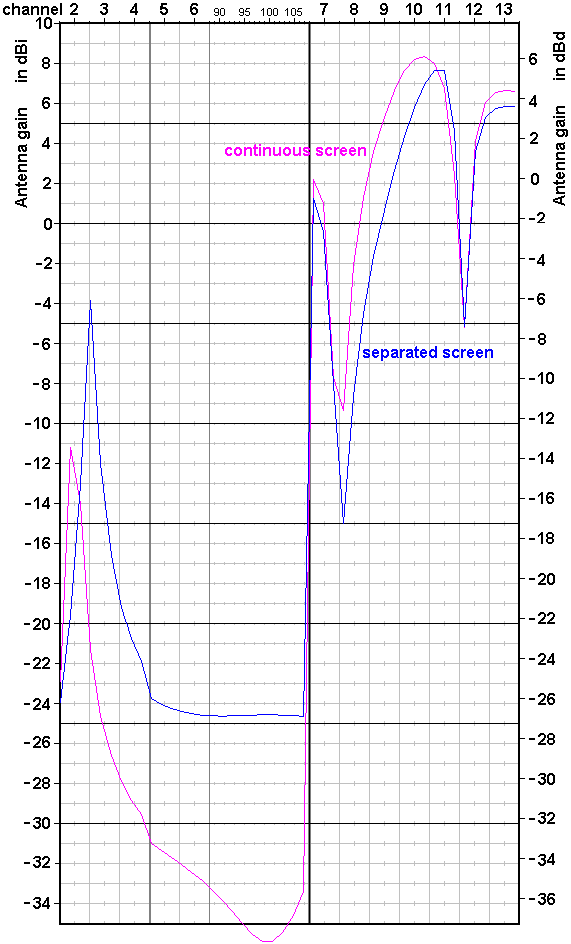
The graph
below shows simulations both with the screens connected and with them slightly
separated. There is a significant
difference in gain between the two cases.
This means you might see dropouts when the wind blows. To prevent this you should bind the two
screens together more tightly (VHF only).
The author has done this using a few common nylon tie-wraps.
This page is part of “An HDTV Primer”, which
starts at www.hdtvprimer.com